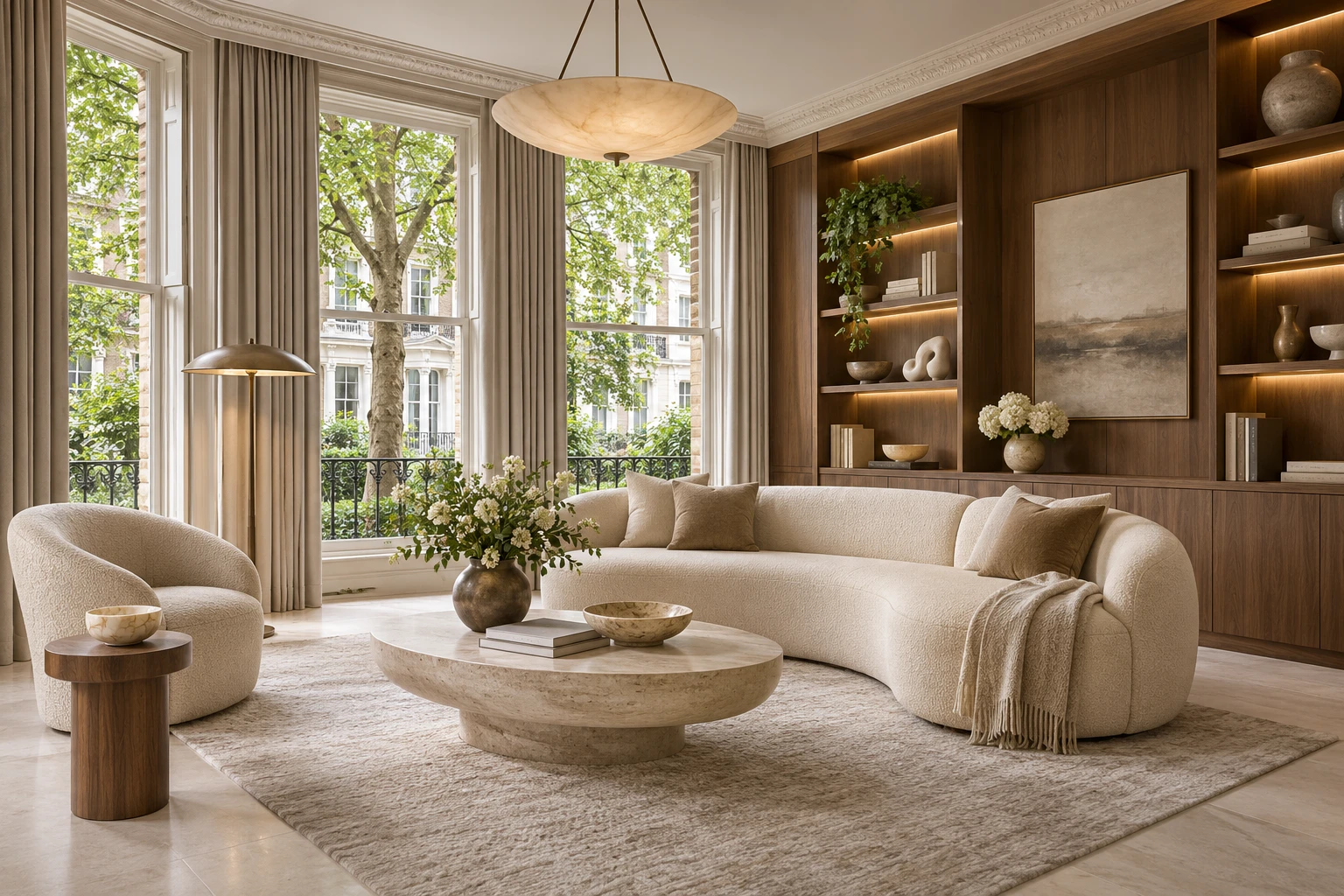
Choose the light before the colour
A room worth understanding
Start by observing the room at three points in the day. A north-facing room receives a cooler, more even light; a west-facing room can become dramatically warmer in the evening. Record what you see before narrowing a palette.
Details that make a difference
Paint large sample boards rather than small squares directly on the wall. Move them between corners and place them beside the actual floor and upholstery samples. This makes comparison easier and avoids being misled by the existing wall colour.
Put the idea into practice
The right colour does not have to remain identical throughout the day. It should change in a way you enjoy. We often choose a slightly warmer neutral for a quiet room, then let timber, wool and ceramic surfaces introduce depth.
A useful next step
Before buying anything, write a short brief for the room. Include what works, what does not, and the decisions you need help with. A measured plan and a few careful photographs make that conversation more productive.
At Stillhaven, we test ideas against everyday use. If you would like a second opinion on your space, our design consultation provides a clear and practical place to start.
Responses
The advice to observe a room before choosing finishes is useful. We tried the sample-board method and could see how much the afternoon light changed our first choice.
Morgan Reed